


By

ART + SCIENCE + TECNOGOLY
FOR ENVIRONMENTAL ADVOCACY
%2014_18_edited.jpg)
%2015_09_01.png)
CORAL RESTORATION AND CONSERVATION
%2010_29_edited.jpg)
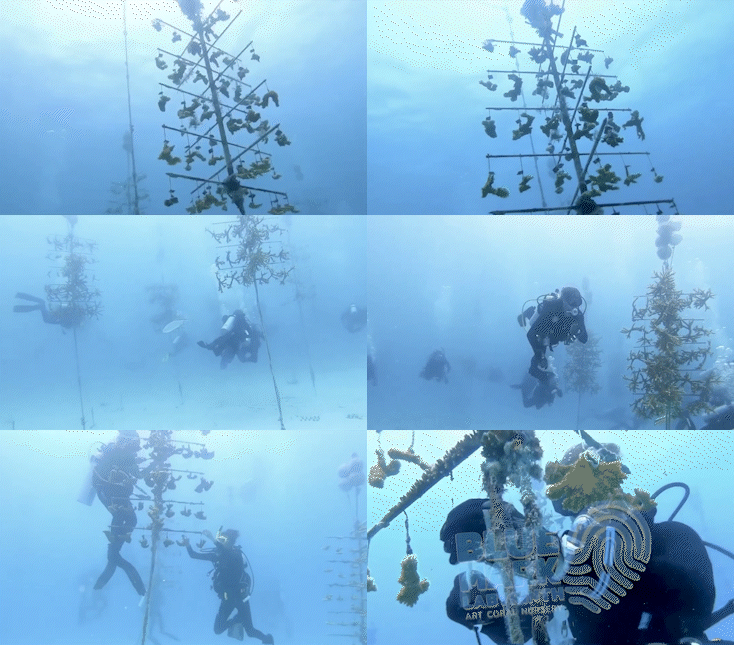
NEW REEF CORAL PARK
EDUCATIONAL TOURIST ATTRACTION
%2014_20_26.png)

TAKE ACTION NOW!


OUR
GRAY MARK
IN THE OCEANS

%2014_28_43.png)
WHY
PROTECT
OUR OCEANS?

%2014_28_52.png)
WHY
PROTECT
THE CORALS?
Because the oceans are essential to life on Earth.
The ocean is the largest ecosystem on Earth, it is the planet’s life support system. Oceans generate half of the oxygen we breathe and, at any given moment, they contain more than 97% of the world’s water. Living oceans absorb carbon dioxide from the atmosphere and reduce climate change impacts.
The diversity and productivity of the world’s oceans is a vital interest for humankind. The battle to save our most diverse ecosystems is entering a critical phase.
Our marine habitats find themselves on the frontlines of the planet's greatest conflict -- one that threatens countless species and the health of future generations -- the fight to avert a climate crisis.
“Our marine habitats find themselves on the front lines of the planet's greatest conflict—one that threatens countless species and the health of future generations—the fight to avert a climate crisis” (CNN).
The oceans are essential to life on Earth. The ocean is the largest ecosystem on Earth; it is the Planet’s life-support system. Oceans generate 50% of our oxygen and contain more than 97% of the world’s water. Living oceans absorb carbon dioxide from the atmosphere and reduce climate change impacts.
The world has lost over half of its coral reefs since 1950. Coral bleaching events, which are caused by warmer ocean temperatures, have, over the last 40 years, become five times more likely to occur all over the world.
By 2050, nearly all the world's reefs will be at risk. (Information provided in part by NOAA and Carbon Brief)
OUR BENEFITS
ECO ART
FOR
AWARENESS
%2014_29_21.png)
AFE uses art to raise awareness to generate eco-ethical habits, protect our oceans and natural resources, and respect the Planet.
Be part!
CORAL RESTORATION+
CONSERVATION
%2020_22_22.png)
BLUE MARK
LABYRINTH REEF
Our coral nursery will be a touristic attraction and an important component of marine conservation, providing a collection of species that will create the new coral art park.
CORAL REEF
ART PARK
ATTRACTION
%2013_04_51.png)
BLUE MARK REEF ART PARKS
The new reef, created with different species forming a print, becomes an underwater art park to be visited by the public.
MUCH FUN
FOR
EVERYBODY!
%2019_17_12.png)
World Premiere
You can leave your Blue Mark for the Oceans a living legacy for future generations.
Join us!
|  |  |  |
|---|---|---|---|
|  |  |  |
 |  |  |  |